
Workers Say Half of Their Meetings Could Be Replaced or Canceled
5 Min Read

Workplace meetings are intended to improve communication and collaboration, but too many can leave employees with less time to complete their responsibilities. As organizations balance in-person, hybrid and remote work, meeting overload has become an important workplace productivity concern. A questionnaire conducted on behalf of Benedictine University surveyed 794 full-time U.S. workers who attend at least one scheduled meeting each week to examine how meetings affect their time and work habits.
Benedictine University sponsored the research to better understand the impact of unnecessary meetings on employee productivity and workplace experiences. The findings revealed that workers considered a substantial portion of their meetings unnecessary and were using different strategies to protect their time. They also highlighted how meeting demands affected employees across industries and work arrangements, raising questions about how organizations can make better use of the workday.
Key Takeaways
- 50% of the meetings workers attend each week could be replaced or canceled without negatively affecting their work.
- Workers spend 2 hours per week in meetings they personally consider unnecessary.
- Cutting the meetings workers consider unnecessary could save $3,150 per worker each year.
- Nearly 9 out of 10 workers (87%) have been in a meeting where they were unsure why they were invited.
- 39% of workers regularly go to meetings mainly because saying no could make them look bad.
- 2 in 5 workers (38%) have created fake calendar blocks purely to stop coworkers from booking meetings.
- 32% of workers report working late on a weekday because meetings consume the hours needed to do their actual jobs.
Half of Workplace Meetings Could Be Unnecessary
Meetings can help teams coordinate projects, share information and make decisions, but their value depends on how effectively they use employees’ time. When meetings lack a clear purpose or outcome, they can compete with the responsibilities workers need to prioritize throughout the day.
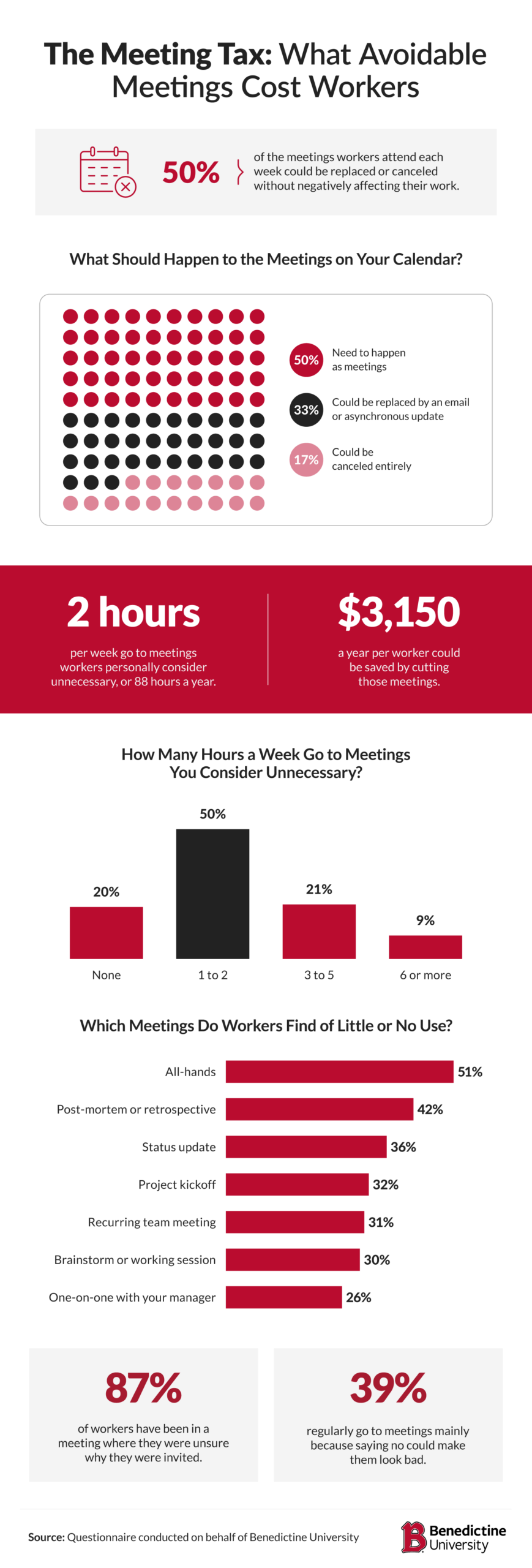
On average, workers estimated that 50% of the meetings they attended each week could be replaced or canceled without negatively affecting their work. Respondents also reported spending two hours per week in meetings they personally considered unnecessary, highlighting the amount of time potentially available for other tasks.
Perceptions of unnecessary meetings varied across industries. Government or public administration workers reported the highest share of meetings that could be eliminated or replaced (55%), followed by technology, software or telecommunications (52%). Healthcare or life sciences, manufacturing and financial services or insurance each reported 51%, while education workers estimated 48%.
Meeting demands also affected employees’ ability to focus on their primary responsibilities. More than half (57%) agreed that meetings took up time they needed for their core job, while 26% said their meetings often or always ended without a clear decision or next step.
Workers Are Finding Ways to Avoid Unnecessary Meetings
Managing a busy calendar can be challenging when employees have limited control over meeting invitations. Rather than openly declining every meeting, some workers have developed alternative ways to protect their schedules and maintain time for independent work.
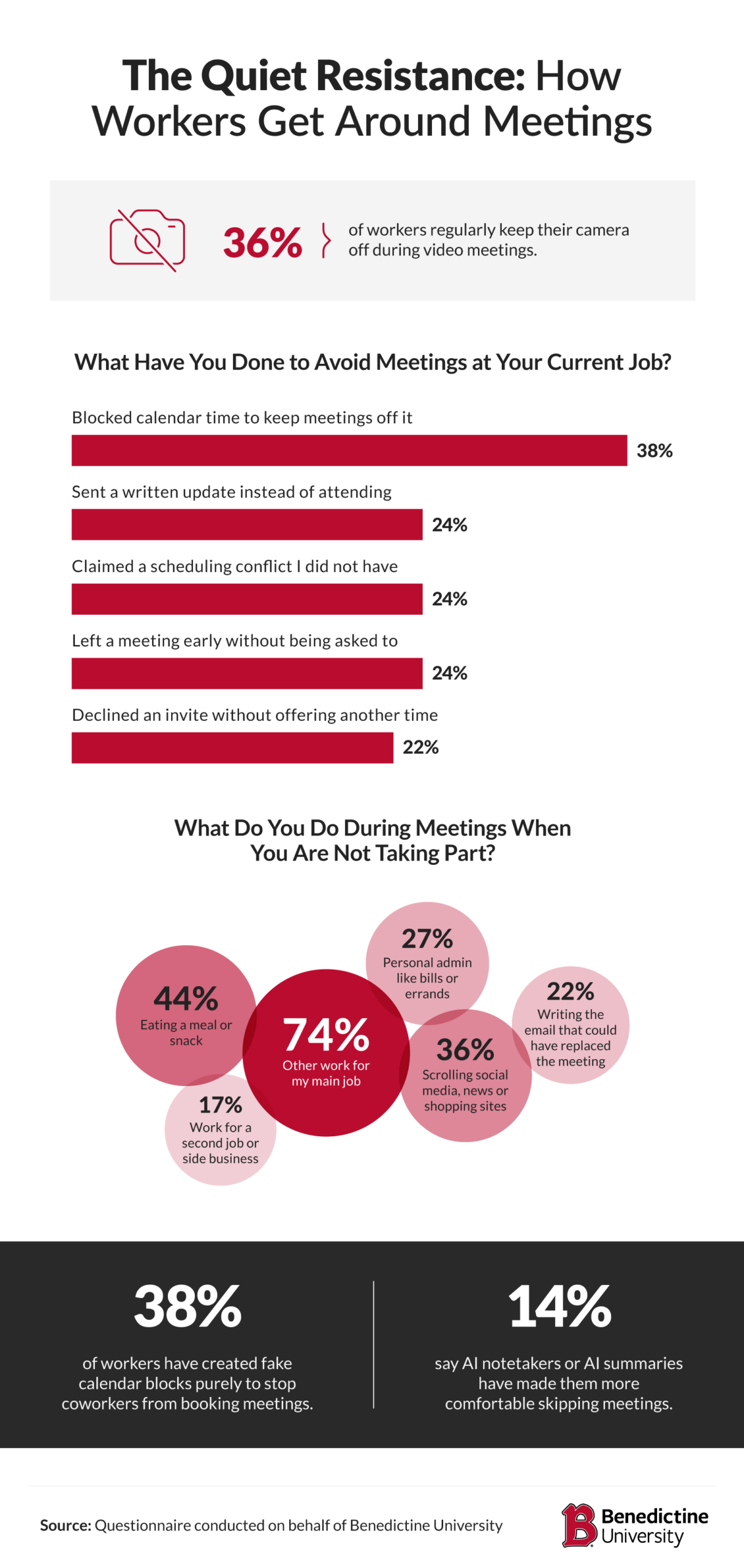
More than one-third (38%) of workers admitted to creating fake calendar blocks specifically to prevent coworkers from scheduling meetings. This practice was particularly common among remote employees, with 56% reporting it compared with 24% of fully on-site workers.
Remote employees were also more likely to disengage from meetings in other ways. Nearly one-third (30%) reported leaving a meeting early without being asked, compared with 21% of on-site employees. Additionally, 42% of remote workers said they did something other than participate while a meeting was happening, compared with 19% of on-site workers and 26% of respondents overall.
Some employees were also using artificial intelligence (AI) to reduce their meeting attendance. Overall, 8% had skipped a meeting because AI could summarize it afterward, with men more than twice as likely as women to report this behavior (11% versus 5%).
Meeting Overload Is Affecting Work-Life Balance and Retention
When meetings occupy large portions of the workday, employees may have fewer uninterrupted hours to complete essential tasks. These scheduling pressures can also influence how workers evaluate their jobs, compensation and long-term satisfaction with an employer.
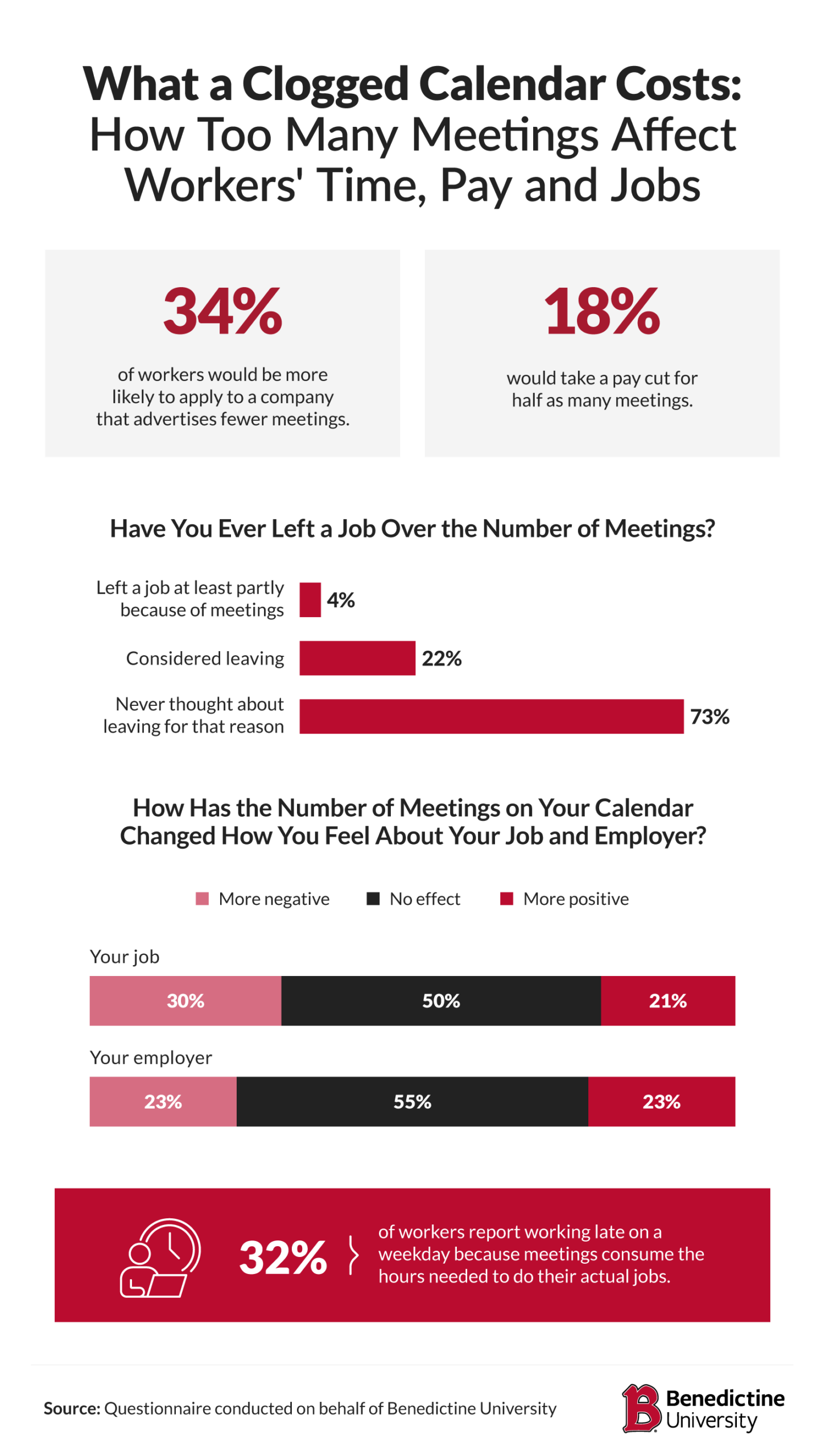
Nearly one-third (32%) of workers reported working late on a weekday because meetings consumed the hours they needed to complete their actual jobs. This finding illustrated how meeting demands could extend beyond scheduled discussions and affect the time employees had available for other responsibilities.
Some workers placed enough value on fewer meetings that they were willing to consider a reduction in compensation. Men were more likely than women to say they would accept a pay cut in exchange for half as many meetings (22% versus 13%), suggesting differences in how employees weighed meeting demands against earnings.
Meeting overload also appeared to influence how some employees viewed their future with an organization. Remote workers were more likely than on-site workers to have quit or seriously considered quitting because of too many meetings (14% versus 8%).
Rethinking Meetings Could Help Employees Reclaim Their Workday
The findings revealed a disconnect between the number of meetings employees attended and the value they believed those meetings provided. Workers reported losing productive time, using avoidance strategies and experiencing scheduling pressures that affected their workdays.
For organizations, establishing clearer meeting purposes and protecting time for focused work may help address these concerns. As workplace expectations continue to evolve, thoughtful meeting practices can support more productive and manageable work environments.
Methodology
A questionnaire was conducted on behalf of Benedictine University to survey adults in the United States about meetings at work. Results are based on 794 respondents who work full time (35 or more hours a week) and attend at least one scheduled meeting in a typical week. The gender breakdown was men (50%), women (49%) and non-binary or preferring not to answer (1%). The generational breakdown included the following: Gen Z (15%), millennials (56%), Gen X (26%) and baby boomers (3%).
Of respondents, 47% work fully on-site, 31% work hybrid and 22% work fully remote. The survey was conducted in October 2026. All percentages are rounded to the nearest whole number, so some totals may not add up exactly. As with any survey, the findings reflect respondents’ self-reported experiences and views at the time of the questionnaire and may not represent all U.S. workers.
About Benedictine University
Benedictine University offers online degree programs designed to help working adults continue their education while managing professional and personal commitments. Its online Master of Business Administration (M.B.A.) program provides an opportunity for students to develop business and leadership knowledge relevant to organizational decision-making. Through flexible online learning, professionals can pursue advanced education while building skills applicable to management and workplace challenges.
Fair Use Statement
The research findings presented in this article are available for noncommercial use only. Anyone sharing or referencing this information must provide proper attribution and a link to Benedictine University as the original source.