
The Career Pivot That Worked: What Successful Career Changers Say It Really Takes
8 Min Read

Changing careers can open the door to new opportunities, but the transition often brings financial uncertainty, self-doubt and questions about which skills employers value. For professionals moving into management or tech-adjacent business roles, understanding what makes a career change successful can help them prepare for the challenges ahead. A questionnaire conducted on behalf of Benedictine University surveyed 420 U.S. adults who had changed fields within the past 10 years and successfully entered management or tech-adjacent business roles.
Benedictine University sponsored the research to better understand the decisions, credentials and timelines that shaped successful career transitions. The findings revealed that many professionals faced temporary financial setbacks, questioned their decisions and relied on transferable skills or additional credentials to enter a new field. Their experiences also highlighted how career transitions differed across generations, industries and genders.
Key Takeaways
- Over two-thirds of successful career changers (69%) nearly gave up before landing their new career.
- 27% of career changers took a pay cut in year one, but 72% earned more than their old job by year three.
- Roughly one-third of career changers (35%) had to accept a lower job level to break into their new field.
- Over half of career changers who earned a credential say they needed it to break into their new field.
- 75% of career changers who earned a credential out-earned their old job by year three, compared with 62% of those without one.
The Timeline and Financial Trade-Offs of a Successful Career Change
Entering a new industry often means professionals must reassess what they expect from job titles, compensation, and career progression. A role that seemed like a natural next step in a familiar field may look quite different in an unfamiliar one.
The transition also varies by person, shaped by age, prior experience, and financial priorities. Someone early in their career may have more flexibility to start over, while a seasoned professional may need to weigh a pay cut or lateral move more carefully.
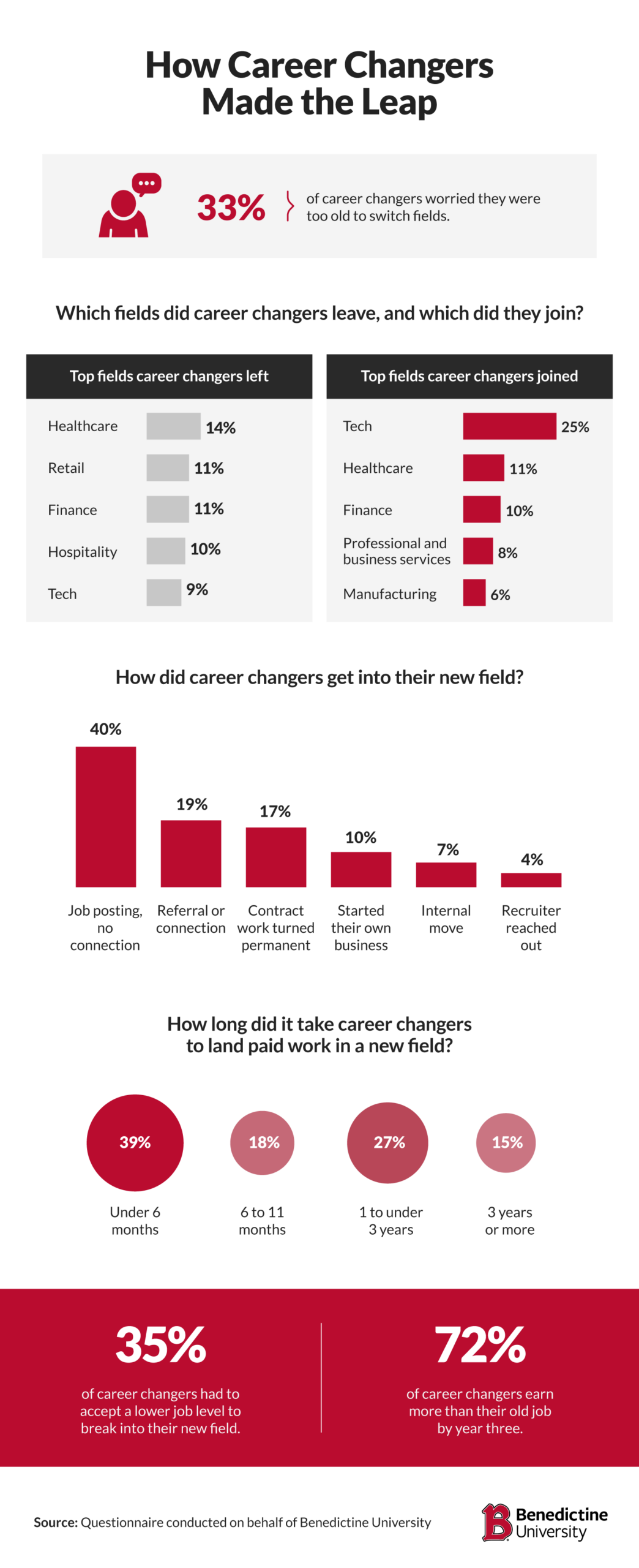
Among career changers who applied for jobs, 67% received their first offer in their new field within 10 applications, including 49% who received an offer after one to five applications. However, finding a new opportunity did not always mean maintaining the same professional standing. More than one-third (35%) accepted a lower job level to enter their new field.
The financial trade-offs were also significant. While 27% of career changers took a pay cut during their first year, nearly half of those who experienced a reduction lost at least 25% of their previous earnings. By year three, however, 72% earned more than they had in their former jobs, including 51% who earned at least 10% more and 24% who earned 25% or more.
Career transitions also produced different financial outcomes for men and women. Nearly three in 10 men (29%) earned at least 25% more than their previous salary by year three, compared with 17% of women. These differences highlighted how long-term earnings varied even among professionals who successfully entered new fields.
Age introduced another layer of uncertainty. Gen X respondents were more likely to worry that they were too old to change careers (42%) than millennials (32%) or Gen Z respondents (19%). Gen X professionals were also more likely to experience a first-year pay cut (37%) than millennials and Gen Z respondents (24% each). In comparison, Gen Z respondents were more likely to land paid work in their new field within a year (65%) than Gen X respondents (55%).
How Credentials, Transferable Skills and Interviews Helped Career Changers Get Hired
Professionals entering unfamiliar industries need to show how their existing abilities carry over to new responsibilities. Hiring managers rarely assume that skills from one field will translate to another, so the burden of making that connection usually falls on the applicant.
Formal education, practical experience, and professional connections can each help communicate that value to prospective employers. These strengths matter most for applicants without a traditional background in their target field, since they offer credible proof of capability where a conventional résumé cannot.
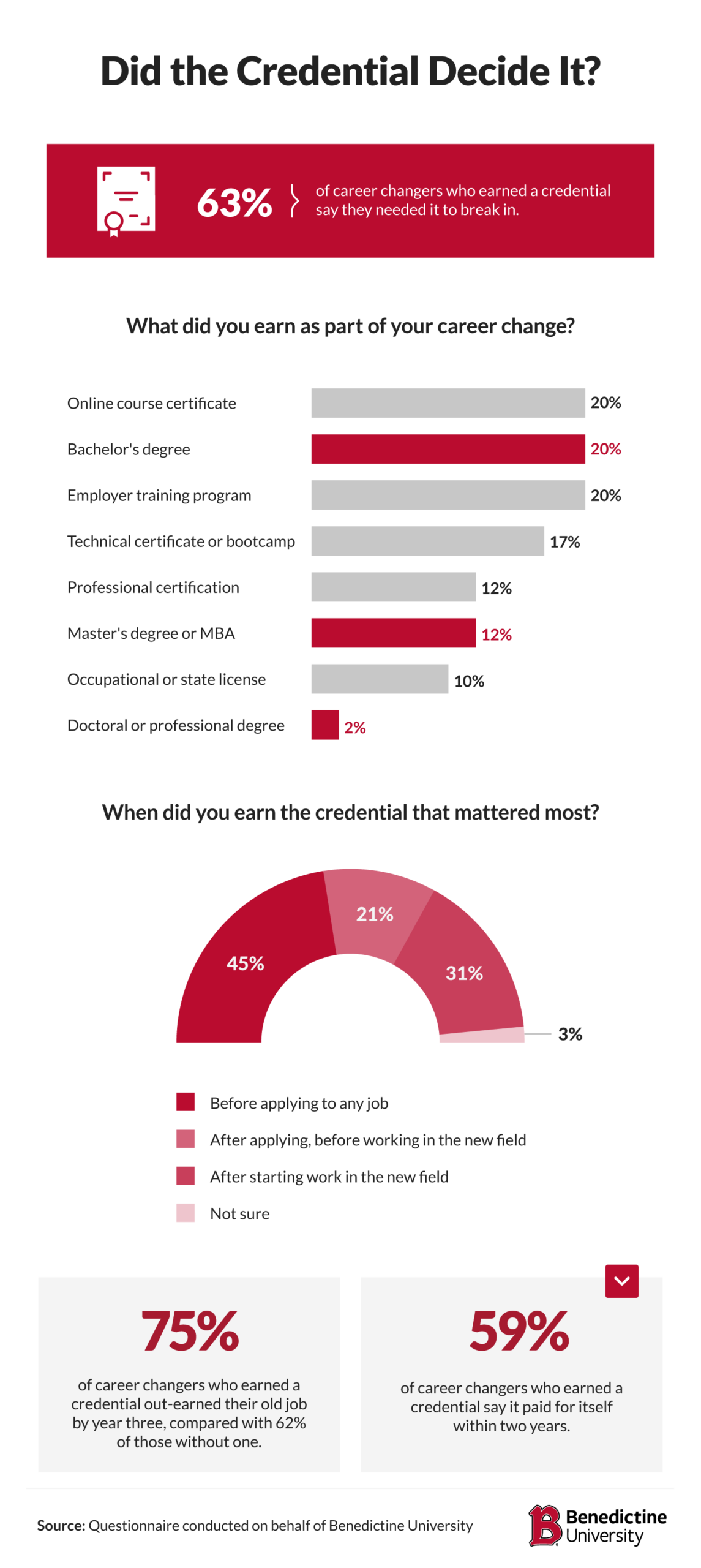
Among respondents who earned a credential during their transition, 63% said they needed it to break into their new field. That share was higher among those working in tech (70%), healthcare (68%) and finance and insurance (65%). Women and men were equally likely to earn a new credential during their transition (75% each). However, men were nearly twice as likely to earn a technical certificate or bootcamp credential (22% versus 12%).
When evaluating what helped them secure employment, respondents valued interview performance most. Two-thirds (66%) said performing well in interviews was very helpful, followed by transferable experience from their previous field (58%) and a formal credential or degree (48%). Referrals or personal connections (41%) and portfolios or examples of previous work (40%) also played important roles.
Portfolios offered another way for career changers to demonstrate their abilities to potential employers. Men were more likely than women to say that a portfolio or examples of their work helped at least slightly in getting hired (76% versus 63%). This suggests that respondents perceived the value of showcasing practical work differently.
Additional credentials were also associated with stronger long-term earnings among the surveyed professionals. By their third year, 75% of respondents who earned a credential made more than they had in their previous jobs, compared with 62% of those who did not earn one. Although the results did not establish that credentials caused higher earnings, they highlighted a meaningful difference between the two groups.
Changing workplace expectations added another consideration for professionals pursuing management positions. More than four in 10 respondents (44%) said artificial intelligence (AI) had greatly changed the skills needed to earn a promotion into management. Their responses underscored the importance of understanding evolving skill requirements when preparing for career advancement.
Why Persistence Matters After a Career Change
Career transitions involve far more than learning new skills or submitting applications. The process is as much about adjusting to a new professional identity as it is about meeting the requirements of a new role.
Professionals must also navigate uncertainty about their qualifications, long-term prospects, and ability to establish themselves in a different field. Doubts about whether past accomplishments will carry weight in an unfamiliar setting can make each step of the change feel riskier than it appears on paper.
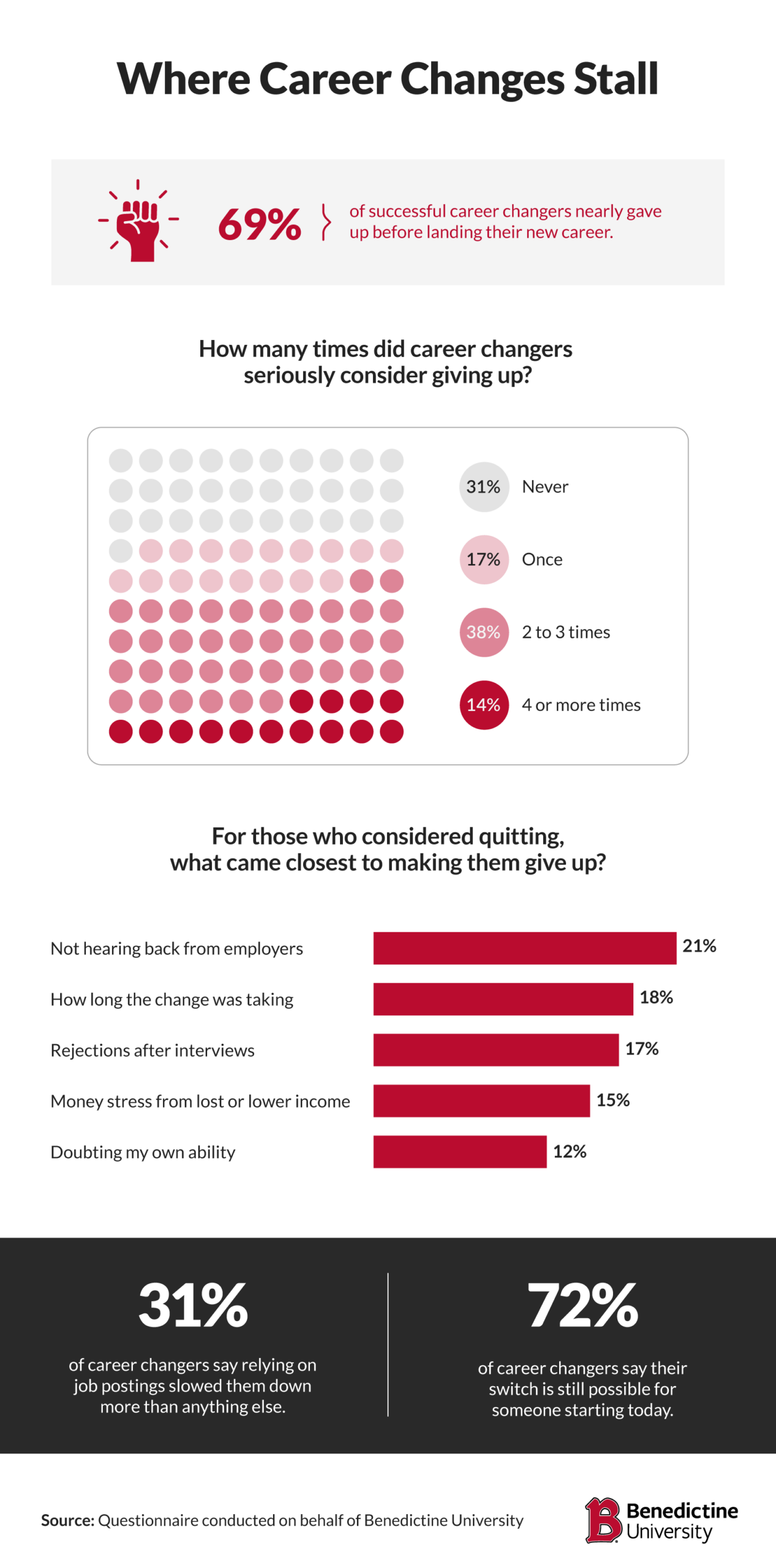
Despite eventually securing positions in their new fields, 69% of successful career changers said they nearly gave up before completing their transitions. This experience was similarly common among men (69%) and women (68%). The findings highlighted how even successful career changes could involve significant periods of doubt.
For many respondents, confidence developed only after they achieved a tangible career milestone. Two in five career changers (40%) said their transition did not feel achievable until they received their first job offer or secured their first paid work. This finding suggested that early professional validation played an important role in how respondents viewed their progress.
Securing a position in a new field did not necessarily eliminate concerns about future advancement. Nearly half of respondents (47%) believed moving into a senior role was harder than it had been five years earlier. That perception was especially common among professionals working in tech (57%) and healthcare (53%), compared with those in finance and insurance (28%).
Building a Career Change That Lasts
Successful career transitions often required professionals to navigate uncertainty, reassess their financial expectations and demonstrate the value of their existing skills. Although many respondents considered giving up or experienced initial setbacks, most reported earning more than they had in their previous roles by their third year.
Credentials, interview performance and transferable experience emerged as important factors in securing new opportunities, while changing workplace expectations created additional considerations for long-term advancement. For professionals considering a career pivot, these experiences offer a clearer understanding of the preparation, persistence and adaptability involved in establishing a new career.
Methodology
A questionnaire was conducted on behalf of Benedictine University to survey 420 adults in the United States who changed fields within the past 10 years and now work in a management or tech-adjacent business role. The gender breakdown was women (51%), men (47%) and non-binary, another gender identity or preferring not to answer (2%).
The generational breakdown included: Gen Z (18%), millennials (54%), Gen X (23%) and baby boomers and older (5%). Of respondents, 40% work hybrid, 30% work fully remote and 30% work fully on-site. The survey was conducted in October 2026. All percentages are rounded to the nearest whole number, so some totals may not add up exactly. As with any survey, the findings reflect respondents’ self-reported experiences and views at the time of the questionnaire and may not represent all U.S. career changers or predict future career outcomes.
About Benedictine University
Benedictine University offers flexible online degree programs designed to help working professionals build their knowledge and pursue new career opportunities. Its online Master of Business Administration (MBA) program develops leadership, strategic decision-making and business management skills that can support professionals transitioning into management roles.
Students can choose from traditional and accelerated online learning options, with opportunities to explore specialized areas such as project management and change management. Through its online programs, Benedictine University helps students balance continued education with their professional and personal responsibilities.
Fair Use Statement
The research findings presented in this article may be shared or reproduced for noncommercial purposes only. Any use of this material must include proper attribution to Benedictine University and a link to the original article.