
The 2026 State of Middle Management Report
7 Min Read

Middle managers translate organizational goals into daily work while supporting employees through change, uncertainty and competing priorities. Their position requires them to respond to expectations from senior leadership while addressing the needs of the teams they directly manage. That responsibility can make middle management a particularly demanding place within an organization.
A questionnaire conducted on behalf of Benedictine University surveyed 549 employed U.S. middle managers to understand the pressures they face, the support they receive and how they feel about their roles. The findings reveal widespread stress and burnout, but they also show that many managers remain satisfied with their work. The results highlight how leadership support may help organizations create a more sustainable experience for the people responsible for guiding their teams.
Key Takeaways
- Most middle managers (88%) have experienced at least one stress symptom related to their role.
- Nearly 1 in 2 (47%) of middle managers would accept a pay cut to stop managing people, yet 73% are satisfied with their jobs, and 70% would choose management again.
- More than half (52%) of middle managers are burned out.
- Nearly 6 in 10 middle managers (59%) agree that returning to an individual contributor role would feel like a personal failure.
- Nearly half of middle managers (45%) keep stress or concerns hidden from their teams.
The Pressures Shaping Middle Management
Middle managers balance the needs of their employees with priorities established by senior leadership. Understanding where that pressure comes from can help organizations identify the resources and practices managers may need most.
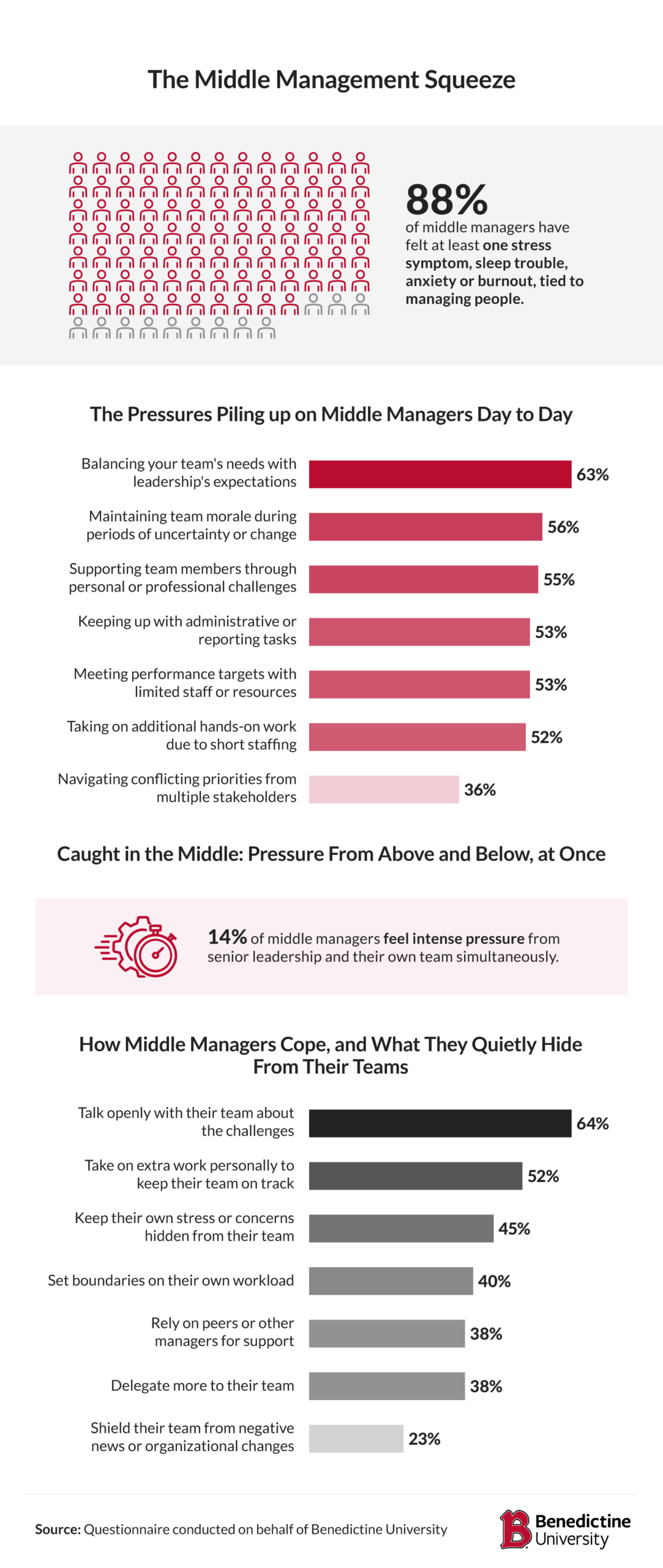
Most middle managers (88%) reported experiencing at least one symptom of stress connected to managing people. Fatigue was the most common symptom at 58%, followed by anxiety at 55% and burnout at 52%. More than one-third (37%) also reported trouble sleeping.
The most frequently reported pressure was balancing a team’s needs with leadership’s expectations, cited by 63% of respondents. Maintaining team morale during uncertainty or change followed at 56%, while 55% found it challenging to support employees through personal or professional difficulties.
Some managers experienced pressure from multiple directions. 14% said they felt intense pressure from senior leadership and their own teams simultaneously. More than half (52%) responded to workplace demands by taking on additional work themselves to keep their teams on track.
Managers also reported constructive ways of responding to the pressure. Nearly two-thirds (64%) talked openly with their teams about workplace challenges, while 40% set boundaries around their workloads. 38% relied on fellow managers for support, and the same percentage delegated more responsibilities to their teams.
Open communication was associated with more positive outcomes. Managers who talked openly with their teams reported 75% job satisfaction, compared with 67% among those who hid their stress. They also reported a lower rate of burnout (52% compared with 59%). Although these findings do not establish a causal relationship, they suggest that employers can support managers by encouraging appropriate transparency, reinforcing workload boundaries and creating opportunities for peer connection.
Strengthening the Support Available to Managers
Middle managers often help employees understand and respond to organizational decisions they did not make. Clear communication, accessible leadership and formal preparation can help managers navigate this responsibility more confidently.
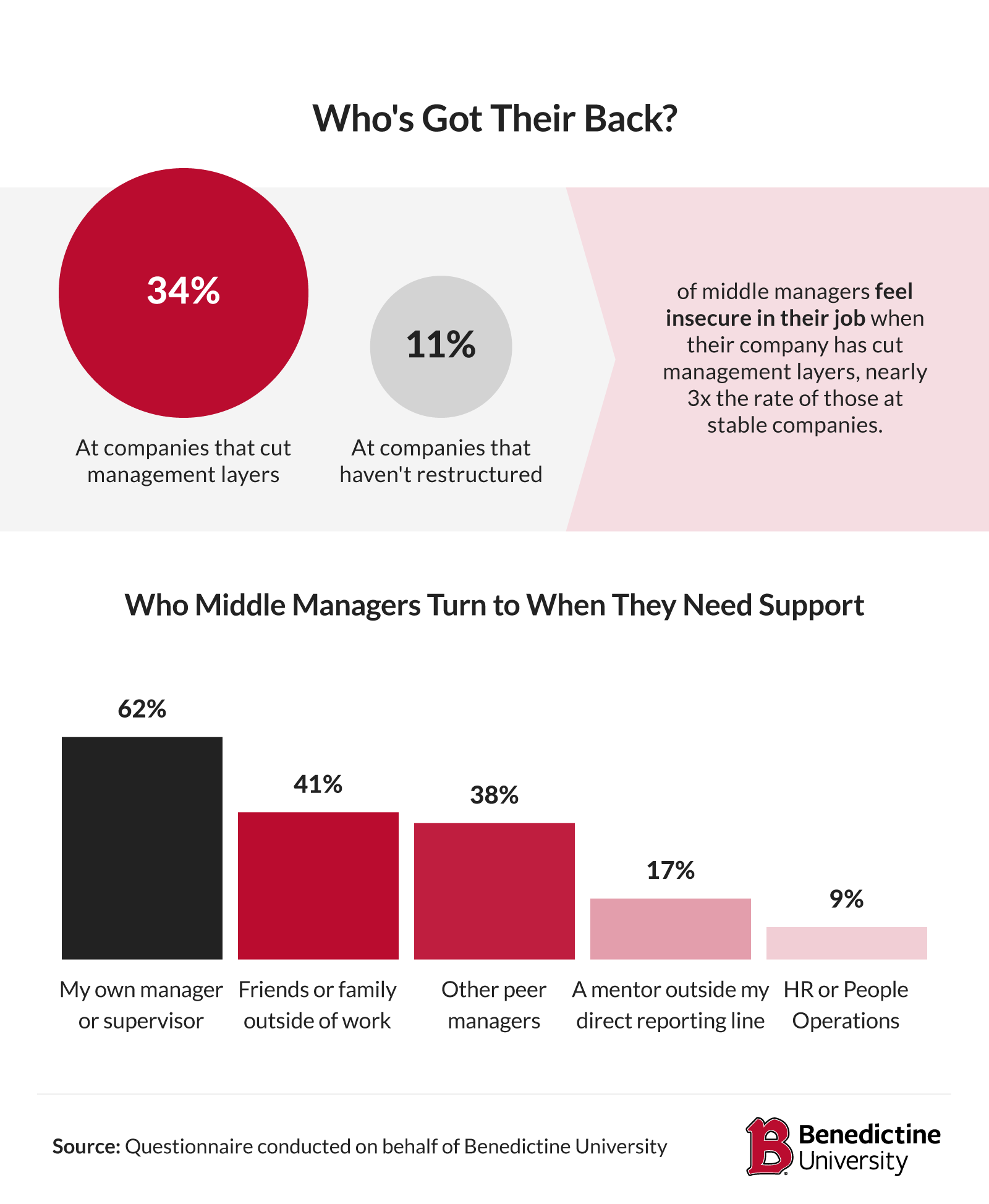
More than one-quarter of middle managers (28%) said they felt unsupported by company leadership. However, 60% felt very or extremely supported by their direct manager, suggesting that many respondents had a reliable source of support within their immediate reporting structure. A manager’s own supervisor was the most common source of help, selected by 62% of respondents.
Some findings highlight opportunities for broader organizational support. Seven in 10 managers said they felt blamed for decisions made above their level at least sometimes, and 43% said they often or always protected their team’s well-being at their own expense. Nearly half (45%) kept their stress or concerns hidden from their teams.
Preparation was particularly limited during organizational change. Among managers whose companies had restructured during the previous year, 80% received no formal training to help them guide their teams through the transition. At organizations that reduced management layers, 34% of managers felt insecure in their jobs, compared with 11% at companies that had not restructured.
These results give employers several practical places to begin. Organizations can provide change-management training before or during a restructuring, communicate the reasoning behind leadership decisions, and clarify what managers are responsible for explaining to their teams. They can also strengthen mentoring and peer networks while equipping direct supervisors to recognize when managers need additional support.
Most Managers Still See Value in the Role
Middle managers expressed a complex but generally positive view of their work. Many acknowledged the demands of managing people, yet most remained satisfied and said they would choose the role again.
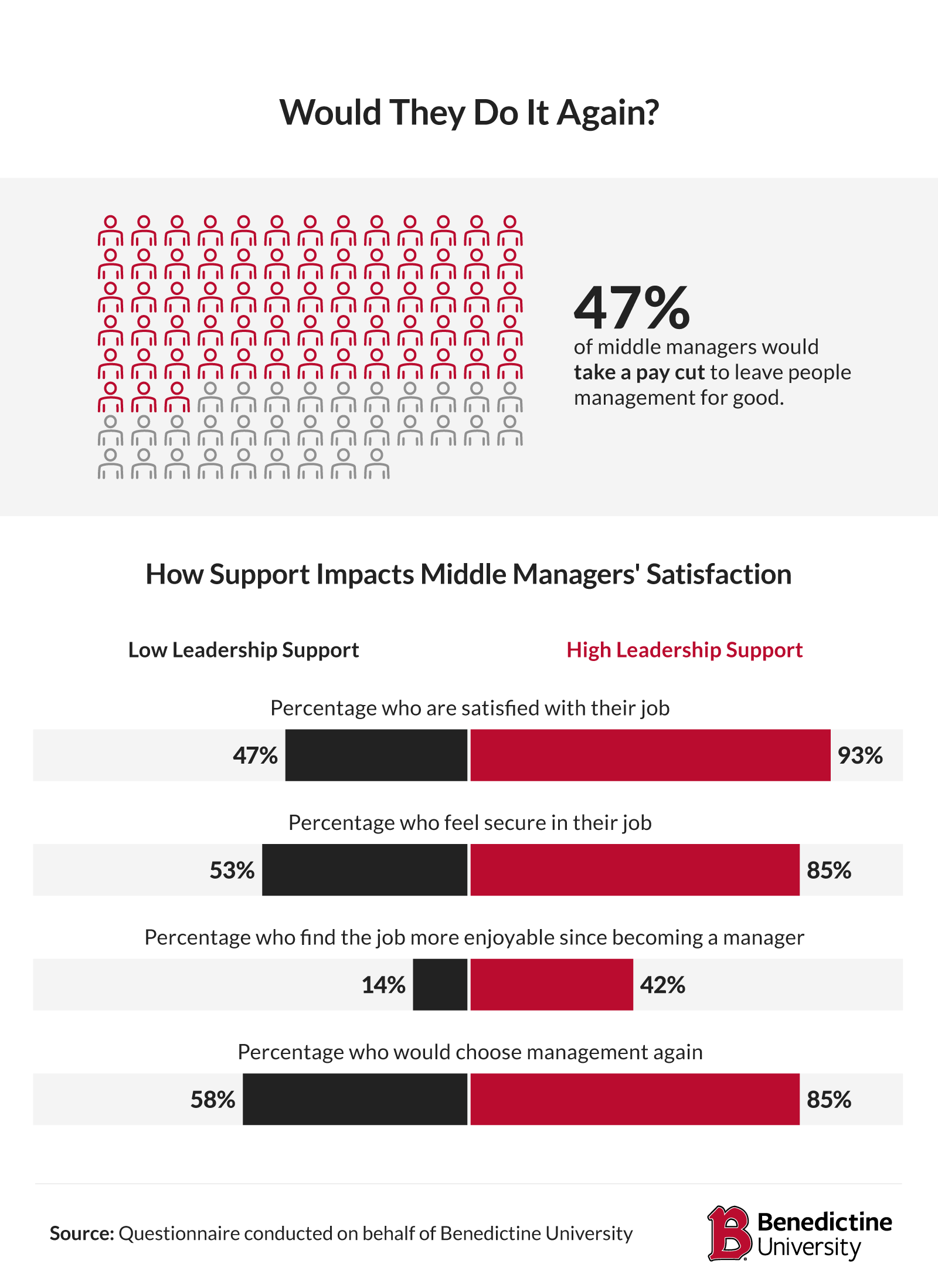
Nearly three-quarters of middle managers (73%) said they were satisfied with their job. Seven in 10 would choose management again knowing what they know now.
At the same time, nearly one in two (47%) said they would accept a pay cut to leave people management. More than one-quarter (28%) had seriously considered returning to an individual contributor role, and the same percentage said management had become somewhat or much less enjoyable.
Career expectations may make it harder for some managers to consider a different path. Nearly six in 10 (59%) agreed that returning to an individual contributor position would feel like a personal failure. Employers may be able to address this concern by creating career structures that recognize both management and individual contributor roles as valuable forms of professional advancement.
Leadership support is the clearest lever available to employers: Among managers who felt highly supported by leadership, 93% were satisfied with their jobs, compared with 47% of those reporting low support. Highly supported managers were also more likely to feel secure in their roles (85% compared with 53%) and say management had become more enjoyable (42% compared with 14%).
Support was also connected to managers’ willingness to remain in the role. 85% of highly supported managers said they would choose management again, compared with 58% of those who reported low leadership support. These comparisons do not prove that support caused the differences, but they indicate that clear guidance, preparation, and recognition may contribute to a stronger management experience.
Building a More Sustainable Management Experience
Middle managers remain invested in their work, but many would benefit from clearer expectations, stronger preparation and consistent leadership support. Employers can help by providing training during periods of change, creating peer and mentoring networks and establishing career paths that allow movement between management and individual contributor roles. These actions may help reduce unnecessary pressure while allowing managers to focus on supporting their teams and contributing to organizational goals. A more sustainable approach to middle management can benefit managers, employees and the organizations they serve.
Methodology
This survey was conducted, on behalf of Benedictine University, among 549 U.S. adult middle managers who were employed full-time when they participated. Every respondent directly managed at least one employee, held the title of Manager, Senior Manager or Director and reported to another manager or organizational leader.
By job level, the sample consisted of Managers (75%), Senior Managers (14%) and Directors (11%). All percentages are based on the number of respondents who answered each individual question. Percentages may not total 100% because of rounding or questions that allowed respondents to select more than one answer.
The survey was conducted in August 2026 via SurveyMonkey. The findings rely on respondents’ self-reported experiences and may be affected by recall or response bias. Comparisons between groups identify associations within this sample and should not be interpreted as evidence that one workplace condition directly caused a particular outcome.
About Benedictine University
Benedictine University offers flexible online degree programs designed for working professionals who want to advance their careers while balancing work and personal commitments. The university’s online Master of Business Administration program develops leadership, strategic decision-making and organizational management skills that can support career advancement across a variety of industries.
Fair Use Statement
The information presented in this article may be shared for noncommercial purposes only. If you reference or republish these findings, please provide proper attribution and include a link back to Benedictine University.