
The Career Growth Report: Why Professionals Want to Move Up Without Moving On
5 Min Read

Career advancement does not have to mean changing employers, relocating or putting life on hold for further education. Many professionals want higher pay, leadership opportunities and new skills while staying with the organizations and communities they’ve already invested in.
A questionnaire conducted on behalf of Benedictine University surveyed 502 employed U.S. professionals to better understand how they are pursuing career growth, the obstacles standing in their way and how online graduate education comes into play. This research aimed to explore the career challenges facing today’s workforce and how professionals are responding to them.
Key Takeaways
- 68% of professionals have been handed a “dry promotion,” meaning more work with no meaningful pay raise.
- 60% of professionals have considered leaving their jobs to advance their careers.
- 84% of professionals say reaching their next career step is difficult, and 34% already see an online graduate degree as their path to advance.
- 66% of professionals now see an online graduate degree as a strategic career move, whether to advance, change direction or stay competitive.
- 29% say employer tuition help would tip them from considering a degree to actually enrolling.
Career Growth Without the Reward
Many professionals continue to pursue career advancement, but their expectations have shifted. Rather than chasing promotions at any cost, they increasingly want opportunities that improve both their careers and their quality of life.
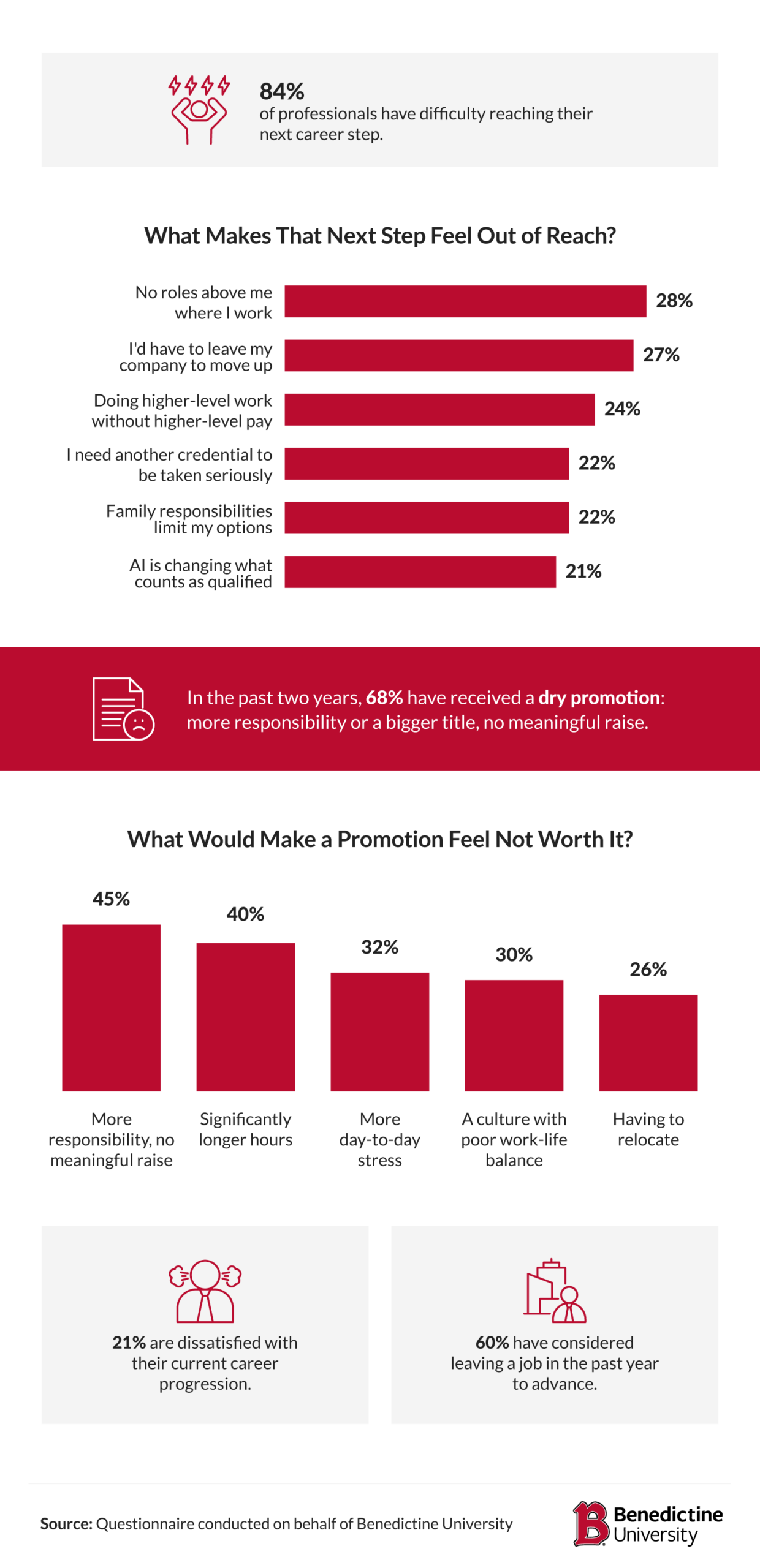
Many respondents reported receiving what has become known as a “dry promotion,” where additional responsibility or a higher title came without a meaningful pay increase. More than two-thirds (68%) said they had experienced this situation. The percentage was highest among Gen Z professionals (75%), followed by millennials (68%) and Gen X (61%). By industry, healthcare professionals reported the highest rate (78%), followed by information technology (77%), finance (66%) and education (63%).
Career advancement remained a strong priority despite these experiences. Nearly 9 in 10 professionals (87%) said they want higher pay, even if their responsibilities stay largely the same. More than half (54%) wanted a better title or greater responsibility, while 43% hoped to move into leadership or management positions.
Limited advancement opportunities also appeared to influence retention. Six in 10 professionals (60%) said they have considered leaving a job to advance their career. At the same time, respondents were not willing to sacrifice workplace flexibility to achieve those goals. Nearly three-quarters (74%) said they wanted to continue growing in their careers only if they could protect the flexibility they currently enjoy.
Professionals Want to Grow Where They Are
Many employees would prefer to build their careers with their current employer rather than start over somewhere else. But retaining ambitious professionals requires more than additional responsibilities.
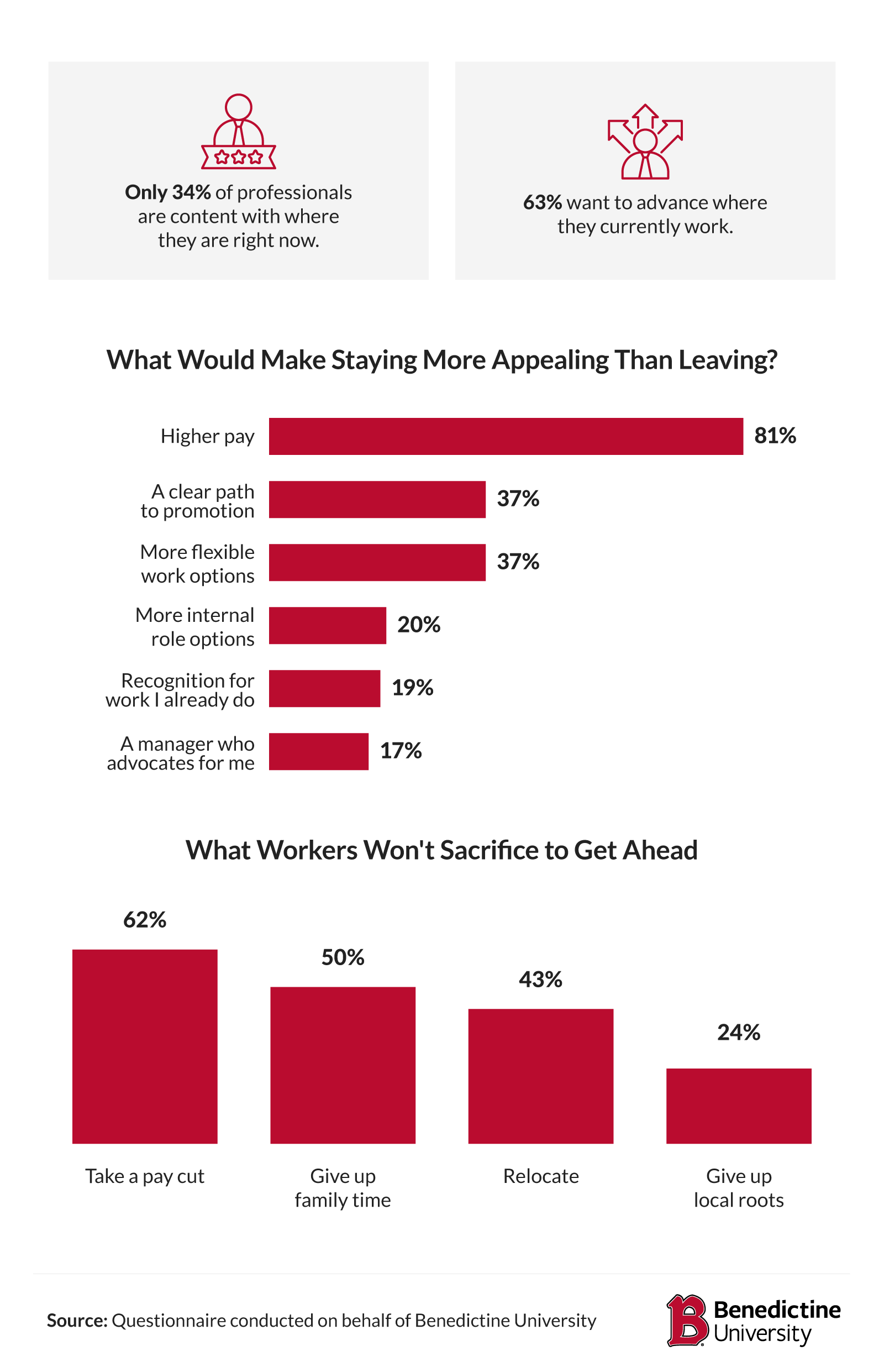
Only 34% of professionals said they are content with where they currently are in their careers. Satisfaction varied slightly across generations, with 38% of Gen X respondents reporting contentment compared to 33% of millennials and 31% of Gen Z professionals. Healthcare workers reported the highest satisfaction among industries surveyed at 44%, followed by finance (42%), while education and information technology each stood at 34%.
Most professionals (63%) want to advance within their current workplace. Employers would be more likely to retain them if they offered higher pay (81%), a clear path to promotion (37%) and more flexible work options (37%).
More than two-thirds (68%) said they feel pressure to remain competitive at work. Among those who felt that way, 43% said it has changed their timeline for building new skills or earning an additional credential. Another 21% said that the growth of AI tools has contributed to those concerns.
Online Graduate Degrees Gain Momentum as a Career Strategy
Many professionals are evaluating practical ways to strengthen their qualifications. Flexible education options appear to be gaining attention among employees who want to continue working while preparing for their next opportunity.
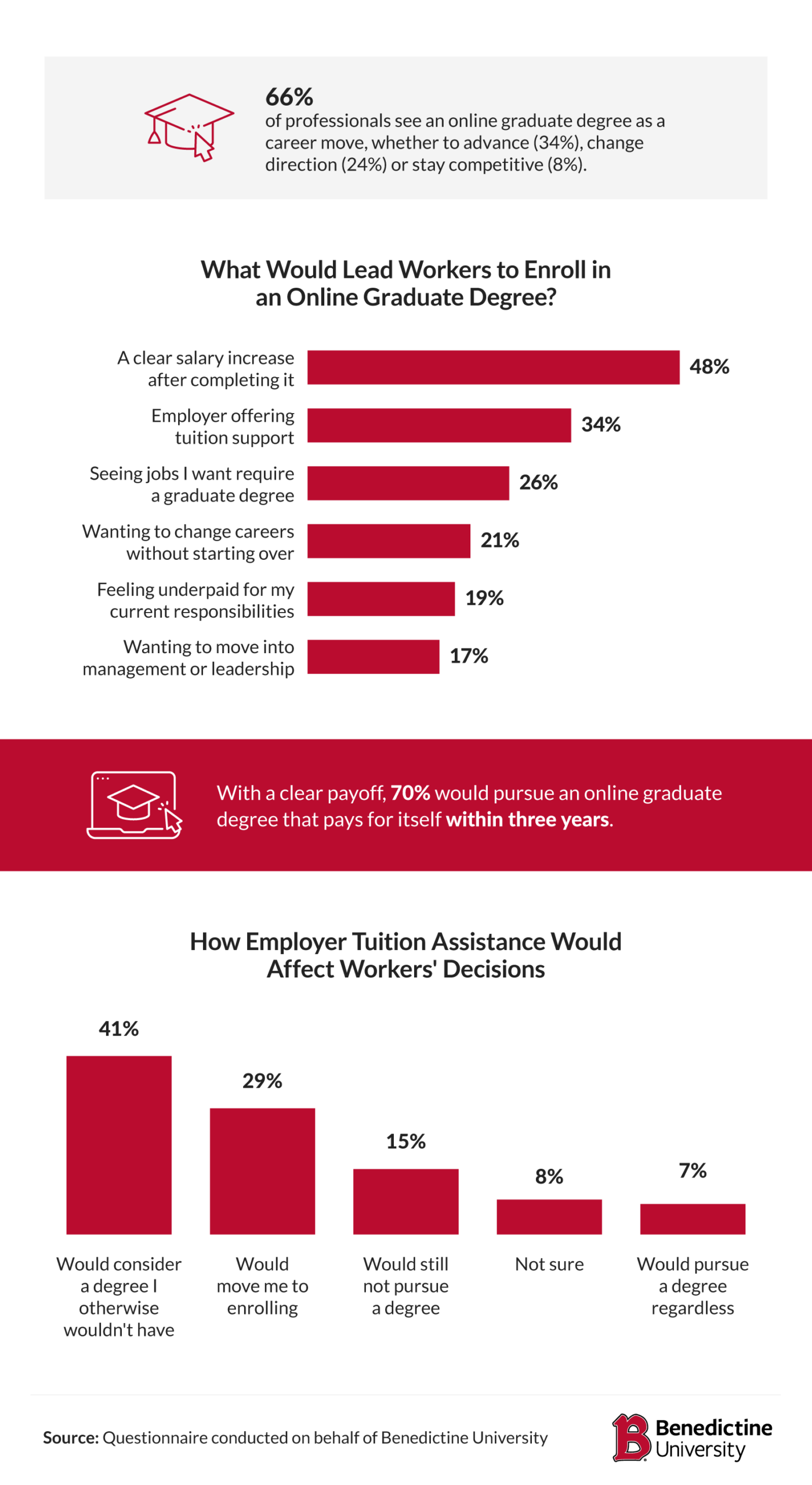
Career progression was widely viewed as challenging. Most respondents (84%) said reaching their next career step was difficult, and 34% already identified an online graduate degree as their preferred path for moving forward.
Overall, 66% of professionals viewed an online graduate degree as a strategic career move, whether they wanted to advance within their current organization, change career paths or remain competitive in a changing job market. Many (70%) would pursue a degree if it could pay for itself within three years.
Workplace education benefits can also help support professional development. Nearly 3 in 10 professionals (29%) said employer tuition assistance would move them from considering a graduate degree to actively enrolling in one, and another 41% said it would lead them to consider a degree they would not have otherwise.
Redefining What Career Growth Looks Like
For many professionals, the next career step is no longer about making a dramatic change, but finding a smarter path forward. As traditional promotions become harder to earn and workplace demands continue to evolve, flexible education offers a way to build new skills and pursue greater opportunities without leaving a current job or sacrificing work-life balance.
Benedictine University’s online graduate programs are designed to help working professionals grow their careers while continuing to build the lives they’ve already created. For many, that means advancing without starting over.
Methodology
A survey was conducted on behalf of Benedictine University of 502 employed U.S. professionals about career advancement. Respondents were distributed across genders and generations. The gender breakdown was women (50%) and men (49%), with 1% non-binary or preferring not to answer. The generational breakdown was millennials (54%), Gen X (25%), Gen Z (17%) and baby boomers (4%).
All respondents were working: 79% were employed full-time, 14% were employed part-time and 7% were self-employed. Among respondents, 66% held a bachelor’s degree, 26% a master’s degree and 8% a doctoral or professional degree. The survey was conducted in July 2026. All percentages are rounded to the nearest whole number.
About Benedictine University
Benedictine University offers flexible online degree programs designed for working professionals who want to advance their careers while balancing work and personal commitments. The online Master of Business Administration (MBA) program equips students with leadership, strategic decision-making and organizational management skills that support career advancement across a variety of industries. Learn more about the online MBA program today.
Fair Use Statement
The information presented in this article may be shared for noncommercial purposes only. If you reference or republish these findings, please provide proper attribution and include a link back to Benedictine University.