
Online Bachelor of General Professional Studies

Apply Credits to Your Bachelor’s Degree in General Professional Studies
100% Online
18 Months
39 Major Credit Hours
$450 per Credit Hour
Request More Information
Complete this form to receive information about coursework, admissions, tuition and more.
Gain a Bachelor’s Degree and a Professional Portfolio in 18 Months
- Apply By: 3/16/2026
- Start Class: 3/16/2026
Complete your bachelor’s degree while preparing for today’s fast-paced careers. Benedictine University’s online bachelor’s in general professional studies features asynchronous courses that hone your skills in emotional intelligence, change management, relationship development, problem solving, decision making and more. As you study, you’ll build professional competencies that apply to every career.
Program Highlights
- Transfer your credits.
- Enjoy convenient online learning.
- Gain valuable professional competencies.
- Experience a program designed for busy working adults.
- Accelerate your career growth with a bachelor’s degree.
Professional Studies Degree Program Highlights
Curriculum
Discover Engaging, Fully Online Professional Studies Courses
39 Major Credit Hours
120 Total Credit Hours
In your online general professional studies degree, you’ll learn from videos, podcasts, personalized content and other interactive media. Each course helps you develop targeted professional competencies. Then, your instructors will help you put together a comprehensive portfolio that showcases resilience, adaptability and readiness to thrive.
Course Highlights
- GPS 3400 Cognitive Flexibility & Problem Solving I
- GPS 3700 Cognitive Flexibility & Problem Solving II
- GPS 4000 Emotional Intelligence, Collaboration & Success
- GPS 4100 Language and Culture: Navigating Differences
- GPS 3200 Sustainability & Citizenship
Admissions Requirements
Apply for the General Professional Studies Degree Quickly and Easily
Application Deadline March 16, 2026
Start Date March 16, 2026
From application to graduation, we want your experience at Benedictine to be great. When you’re ready to apply to your program, complete a free online application and provide the required documents. You’ll need official transcripts showing at least a 2.0 GPA to apply for the bachelor’s degree in general professional studies.
Call us at (866) 295-3104 or request information to speak with an admissions counselor who can guide you through the decision and admissions process.
| Online Application Form | Apply Now |
|---|---|
| Degree | Associate degree preferred but not required. |
| Transcripts | Submit official transcripts from your previous regionally accredited institution(s) with a minimum cumulative GPA of 2.0 based on a 4.0 system. |
| Transfer Credits | Awarding of credit is determined through the process of transfer credit evaluation and/or program/departmental approval. Students pursuing this major will need to complete general electives to fulfill the University requirement for 120 credit hours toward graduation. |
| Credit for Work/Life Experience | Students can submit Prior Learning Assessment (PLA) portfolios for a maximum of 12 general elective credit hours.
|
International Students
We welcome international students into the B.A. in General Professional Studies program. For admission, prospective international students must submit proof of English proficiency. Visit the Undergraduate International Admission page for more information about application materials, procedures and requirements.
| Undergraduate TOEFL/IELTS Requirements | Undergraduate international students must meet the following TOEFL or IELTS requirements:
|
|---|
Tuition & Aid
Explore Tuition for the Online Bachelor’s in General Professional Studies
Calculate your cost for attending BenU Use our tuition calculator to help you estimate your total tuition costs.
Benedictine University’s online bachelor’s degree in general professional studies is an affordable way to position yourself for advancement. We make it possible to invest in your education so you can complete your bachelor’s degree, elevate your salary potential and pursue rewarding new career opportunities.
| Cost per Credit Hour | $450 |
|---|---|
| Total Credit Hours (Major) | 39 |
| Total Estimated Tuition (Major), Without Fees | $17,550 |
| Student Services Fee | $40 per credit hour |
| Other Costs to Budget For | Textbooks, course supplies and loan fees are not included in the tuition estimate. |
Proud to Support Our Military Students
Benedictine University is grateful for the service of the men and women of the U.S. military. We participate in the Yellow Ribbon program and offer a Military Scholarship to active-duty and veteran service members. Additionally, our admissions team can help you make the most of the education benefits available through the Department of Veterans Affairs.
We strive to provide valuable returns as you progress through your online program and career. To make your program cost-effective, we can help you explore financial aid options, scholarships, military benefits and more. Plus, learn how tuition reimbursement programs help you save money while earning a career-aligned degree.
Tuition Details“I was extremely impressed with how much the professors invested in their curriculums as they were all curated for the program – they were easy to navigate with an appropriately challenging workload.”
–Phil Coote, GPS Major, BA – Benedictine University, Class of 2022

Boost Your Career Prospects and Salary Potential
The competencies you acquire during your online bachelor’s degree in general professional studies can transfer to diverse industries and fields, such as business, communications, education, government, health care, social services and more.
Your bachelor’s degree leads to a higher salary potential in nearly any career. According to the U.S. Bureau of Labor Statistics, individuals with an associate degree made $1,058 per week in 2023, while those with a bachelor’s degree made $1,493.1
Explore CareersPotential Jobs for General Professional Studies Graduates
Project Management Specialist $100,750 2023 median annual wage2
Human Resources Specialist $72,910 2023 median annual wage3
What You’ll Learn
Because each professional studies course is structured around competencies, you’ll focus on building specific capabilities. You’ll be able to create tangible artifacts showing mastery of those competencies and collect them in a portfolio.
Program Outcomes
Benedictine’s online B.A. in General Professional Studies helps you achieve the following competencies for each course.
- Prioritize resources to meet commitments. Anticipate and persist through difficult and complex situations.
- Embrace change, manage multiple demands and adapt ideas or different approaches suitable to changing circumstances.
- Assess the significance and the impact of decisions on individuals, communities and the natural world both now and into the future.
- Distill large amounts of disparate and/or complex content into refined information and good design.
- Evaluate and apply appropriate decision frameworks based on assessing the task at hand.
- Seek relevant, credible background knowledge to support critical thinking and decision making.
- Lead, cultivate and participate actively with diverse groups of people toward a shared goal. Communicate effectively and seek a variety of perspectives.
- Focus on enriching the lives of individuals, building better organizations and promoting the common good in morally responsible ways.
“The fully online program was fantastic! It allowed me to work, stay connected with my family, and complete the program at my own pace. I never thought I could achieve what I did, but it was an incredible experience.”
–Tanya Barrett, GPS Major, BA – Benedictine University, Class of 2023
Risepoint Studio (00:01.601): Hi, thank you for meeting with me today. I’m very excited to get to know the program and the university. Could you give a brief introduction as to who you are, the program and the university that you work for?
Martin Tracey (00:15.95): My name is Dr. Martin Tracy and I’m the program director for general professional studies at Benedictine University. The GPS program is an accelerated online bachelor of arts degree program designed specifically for working adults who want to complete their degree while continuing their careers. What makes the program special is that it’s built around developing the professional competencies that employers actually seek.
You can get your BA in as few as 18 months in a fully online, flexible eight week format. The whole program is designed around your professional lives and interests, helping you to advance your career and advance your education.
Risepoint Studio (01:00.844): I think that’s a great answer. My bachelor’s, will say was definitely harder than my master’s. So it’s good to know that people have the opportunity to be a working professional and complete their bachelor’s. So into the first question, because you mentioned this, how does the GPS curriculum integrate students current professional experiences into their academic journey?
Martin Tracey (01:30.274): What makes the GPS curriculum unique is how we’ve deliberately designed it to put students’ work lives at the center of their learning. Unlike traditional programs where professional experience occasionally comes up, in GPS it’s the actual center of the program. Each course asks students to examine their professional contexts in dialogue with great ideas from the arts, the humanities,
and the social sciences. For example, in GPS 3100, Lifelong Learning and Change Management, students develop a professional action plan that discusses their personal goals, structural and personal barriers to success, strategies for overcoming them, priorities for growth. In the GPS course 3900, students at our Catholic and Benedictine University examine the value of
Benedictine hospitality and connect it to their experiences in the workplace.
Risepoint Studio (02:35.863): I think that’s a great, great answer. I think the work that they do and their professional experience is important to connect that to the classroom or the curriculum. I actually did go to a liberal arts program for my bachelor’s, so I’m very excited to know what this answer is. But in what ways does GPS differ from traditional liberal arts programs when it comes to real world application?
Martin Tracey (03:11.63): you
Martin Tracey (03:15.318): fundamental difference comes down to this. GPS has a competency orientation rather than a disciplinary focus. You know, in a traditional liberal arts degree, you’re asked to master the field, literature, philosophy. Workplace connections are not always explicit. In GPS, those connections are explicit. We cultivate the competencies that employers actually seek.
Qualities of character and intellect like tenacity and accountability, critical thinking and problem solving, working effectively within diverse teams. The entire curriculum is designed around developing and demonstrating these professional competencies.
Risepoint Studio (04:00.407): I love hearing that because a lot of times you hear people, what they’ll do is they’ll go to like a trade school and that’s how they connect their professional experience to the real world experience. But it might be because a bachelor’s might be a little long. So can you speak to how the accelerated 18 month timeline supports working adults and achieving their goals faster?
Risepoint Studio (04:33.825): I’ll mute myself during your answers and that’s why you don’t hear me.
Martin Tracey (04:45.145): sorry, just need a second.
Risepoint Studio (04:47.798): You’re okay.
Martin Tracey (05:10.062): And should I just start speaking when I’m ready? Like in a minute or two? Like, okay. Or in a second.
Risepoint Studio (05:14.56): Yeah, can speak when you’re ready. Yeah, it looks great. Do you want me to rephrase the question for you or re-say it again for you?
Martin Tracey (05:18.113): Everything look okay?
Martin Tracey (05:26.414): got it in front of me if it’s the same question three effectively. Just kind of want to make sure I say this in a compressed way.
Risepoint Studio (05:29.631): Yep. Yep.
Risepoint Studio (05:35.894): to give detail but you know making sure it’s still concise. So you can give examples and detail if that helps but you know still kind of wrap it up in a nice little bow when you answer it.
Martin Tracey (05:57.102): For the working adults who are the focus of this program, time is perhaps their most precious resource, and this 18-month completion timeline recognizes that reality. Students who enter with sufficient transfer credit can complete their BA in as few as three semesters. We have an eight-week course structure instead of a 16-week course structure. Students typically take two eight-week sessions per semester. That gives them a full load for the semester.
but space is now in a manageable way.
They’re deeply focused on two subjects at a time. So someone who started in the fall of 2025 could graduate in the spring of 2027. There are no prerequisites and no cognate requirements. The courses are streamlined so that you can enter when you’re ready and complete the program in that short framework. We had this goal at the outset when we created GPS. There are a lot of people
for whom life gets in the way. They were unable to complete a degree. They’ve earned credits and it’s now time to get that credential that they need for their professional career. Degree completers will find in GPS a program with rigorous standards that’s structured to help them succeed.
Risepoint Studio (07:22.261): That’s a good answer. I think I would love to go a little bit more about the transfer credit process. I didn’t have that as one of our prepared questions, but you had mentioned transfer credits coming in. Is it easy for students to transfer credits they had from maybe a previous institution?
Martin Tracey (08:15.416): The GPS program wants to recognize the work that you’ve done earlier in your studies and give you the credit you’re due. We have a transfer articulation process that examines your resume and finds corresponding courses within our curriculum. It’s straightforward. We’re a member of the Illinois Articulation Initiative, which also stipulates that when you’ve already completed your general education requirements at a community college, we accept those requirements wholesale.
And then what you’re left to do is to meet the broader university graduation requirements and the requirements of our general professional studies program. Those requirements themselves are streamlined. It’s a major consisting of 12 courses, 36 credit hours. Some other majors at other institutions can have many more credit hours than that, which slows the time to degree. We’ve really thought this through in a way that’s meant to…
respect the work of transfer students and connect it with their study in the general professional studies program.
Risepoint Studio (09:22.9): You’re very right. My my bachelor’s was 120 credits and I went to, like I said, a liberal arts college. So it was interesting that I didn’t transfer credits in from the community college because I knew that they wouldn’t be accepted. So it’s good we touched on that a little bit for students to know, OK, they’re going to be accepted. And I didn’t do that work for for just nothing. So it’s good. Yeah.
Martin Tracey (09:48.622): Yeah. Shane, do you think the voice and the tone I’m using, I’m speaking somewhat quickly and also kind of in a little dramatized way to try to punctuate certain points and stuff. Honestly, is it seeming natural or is it a little too canned? What would you recommend to be the most effective in this kind of video?
Risepoint Studio (10:17.039): It’s not very natural, I will say a little bit. maybe like moving forward, we can do the style of how you’re talking to me now. It’s just what we want is obviously articulation and conciseness, but please don’t be worried by the cut down of the video and the editing process. They’re amazing at that and they’ll cut it down naturally. So feel free to just talk as if you were talking to a student and
in your classroom, just like you’re talking to me now.
Martin Tracey (10:49.058): Well, with that in mind, do you mind if I take a crack at the other answers that I’ve already answered? I’ll be real brief, but I just really, we need this to be successful and I don’t want to come across as fake in any way. Like I really believe in this program that, you know, yeah.
Risepoint Studio (11:04.595): It’s not. No, it’s not fake. think it’s just it’s just really articulate and that’s that’s great.
Martin Tracey (11:13.196): Yeah, but still, I watch a lot of videos and I know that you wanted an emotional connection with people where they don’t feel like they’re being talked to, but they’re being… So how about if I just very briefly say, okay, here’s my introduction, here’s question one. So they have another take maybe to look at, is that okay?
Risepoint Studio (11:25.766): Talk to you later.
Risepoint Studio (11:33.138): Yeah, no, that’s perfectly fine. Go ahead and do you want me to ask them again to you or are you just going to answer them?
Martin Tracey (11:39.02): No, I remember. I’ll just say, OK, here’s the introduction question. OK?
Risepoint Studio (11:44.198): Yeah, of course. I’ll mute myself. Go ahead.
Martin Tracey (11:47.586): Hi, my name is Martin Tracy. I’m a professor of philosophy and the director of the general professional studies program at Benedictine University. GPS is a fully online accelerated undergraduate degree program that’s designed for working adults who want to complete their degree efficiently. It’s built around professional competencies that employers seek. The goal of the program is to help you advance your career and to do it in an innovative way, not through the study of
dry business subjects as such, but rather through engagement with the arts, the humanities, and the social sciences. It’s a flexible program designed to complement your busy work and family life.
Martin Tracey (12:35.79): All right.
Risepoint Studio (12:37.075): That was great. Yeah, that was good. I think the intro was good. Do you want to keep going with some of the other questions? Do you have any other responses?
Martin Tracey (12:43.596): Yeah, yeah, I’ll do question number two real quick. Question number one, which was about integrating professional experiences into their academic journey. Okay.
Martin Tracey (13:01.868): What makes GPS unique is the way that we’ve made the professional interest of students the focus of the program. Unlike other kinds of college degrees where your professional experience might come up incidentally, here it’s the focus. We ask students about their work lives, the problems that they’ve faced, the challenges that they’re dealing with, and we cater assignments to draw upon their experiences and to use them to think about the meaning of the work they’re doing.
their goals in their life, and to cultivate the skills that will help them get ahead. Skills in communication, in teamwork. These are skills people already possess. What we’re about is trying to refine and cultivate them in a way that is engaging through the study of rich texts in conversation with other interesting and talented people.
Risepoint Studio (13:58.674): That was good. It was good. I can understand every word very clearly. If you want to speed it up just a hair on like question two and question three, that’ll help too with just getting everything in while also just, it sounds like we’re just having a conversation, which is great, but I think that was a good answer too.
Martin Tracey (14:08.268): Okay.
Martin Tracey (14:19.448): Good, okay.
Risepoint Studio (14:20.977): I’ll mute myself again.
Martin Tracey (14:23.818): yet question too is about how it differs from traditional liberal arts programs.
Martin Tracey (14:32.3): key difference is the competency focus rather than a disciplinary focus. If you are pursuing a degree in history or literature, your goal would be to master that field and maybe perhaps prepare yourself for future graduate study as a specialist in literature or history. That’s not the way we’re using the liberal arts. We’re trying to draw on great minds, beautiful art.
important historical events to reflect upon work today, how to make it more meaningful and significant. We’re all about teaching competencies that employers seek, the qualities that they’re looking for in the people that they hire and promote. Things like tenacity, accountability, critical thinking, teamwork. Those are the names of the courses in the GPS program. We’re not about ivory tower debates.
We’re about real world applications and making a meaningful impact on people’s work lives.
Risepoint Studio (15:37.777): That was good. I think that’s really good. I think it shows the importance of the classes because when you’re looking at your class, you’re thinking, well, why am I taking this class? I thought that with school, you know, why am I taking this theater class or why was I taking this philosophy class and just having some background why why students would be taking that. It was good. Good response. Are you ready for question three and then we can be able to move on?
Martin Tracey (16:04.27): Yeah, yeah. Thank you, Shayan. This is going about the accelerated 18-month timeline.
Risepoint Studio (16:07.054): Of course.
Risepoint Studio (16:12.706): Yes.
Martin Tracey (16:19.118): The GPS program is designed for working adults, people who have professional responsibilities and family responsibilities that limit their availability. With that in mind, we’ve set the program up so it can be completed in 18 months. Students take courses in an accelerated eight-week format. They typically take two courses concurrently in the first eight weeks of a semester.
and then another two courses in the next week. This gives them a full-time load, ensuring their eligibility for aid and the other benefits that come from full-time status, while at the same time making the workload manageable. They’ll do two courses at once instead of four or five.
Risepoint Studio (17:13.636): my mute wasn’t coming off for some reason. I didn’t know why. It was because it was pulling up not my mute, which is disastrous. But I think that was a good response. So as we’re moving forward, just try to make it as much as you can as if we’re having just a casual conversation as well. And believe me, the way that they edit this and the way that they put it together.
you will look great and the answers will look really good. I promise there are a lot of students who say, like if so, and we do a great job of just making sure that it sounds really articulate, but it also sounds very concise in the end. So don’t worry. It’ll be good.
Okay. So I’m really excited to know about the fully online format. So my bachelor’s, like I said, not fully online, but my master’s has been fully online. And so I’m very curious. You have a whole eight week program instead of the normal 16 week. So with that, that can be a little bit more intense. I know that with the eight week courses. So how does the fully online format.
and flexible course sequencing helps students maintain a healthy work life.
Martin Tracey (18:36.738): The fully online asynchronous format means that students can complete coursework whenever and wherever it fits into their lives. There are no set class times. There’s no commuting. There’s no rearranging of work schedules. You do the work when you can do the work. The courses have deadlines, but they’re announced in advance and they don’t require you to be a specific place at a specific time. That’s the part that we found doesn’t work for a lot of working people.
people with families. The sequencing of the courses, we have what we call a carousel model, meaning the courses are offered in a certain pattern in the fall and the spring, but you can join the GPS program at any point in that sequence. You don’t have to take the courses in a particular order. There aren’t prerequisites. So those kinds of burdens often impede students seeking degrees.
get hung up and they have to wait for courses to be offered and they can’t take this course because they haven’t taken this other course. We’ve thought all this through in a way that eliminates those frustrations. You take four courses a semester over three semesters, that’s the heart of the program. That will get you your GPS degree.
Risepoint Studio (19:57.743): Good, that helps that because I see my own questions, know. Well, that’s really good. And I think that it could be very scary for students coming in if they think, OK, well, I can’t come in in the spring. I have to come in only in fall. That’s how a lot of bachelor’s programs are. And to have just a structure that understands them as a working adult, it’s nice. It’s good to see that the program supports them as much as possible. So that answer was great.
I did ask question five already about transfer credits. Is there anything else maybe you wanted to talk about with that? Do want me to read redo the question?
Martin Tracey (20:36.782): I think that was the one where I shifted to a little more natural mode already. So I think that’s in there.
Risepoint Studio (20:41.186): Thank you.
Yeah, it is perfectly so. Then we’ll move on to questions.
So I am hearing some background noise.
Martin Tracey (20:55.598): Yeah, that was, I put myself in focus mode. thought I said for like two hours and it’s somehow telling me my focus is ending. So let me fix that.
Risepoint Studio (21:09.005): I think I know what you’re doing instead. Here is actually what you should do. So when you go in to focus, it’s not actually a clock. It is also a do not disturb during focus. So in your settings app on your window device, you go to system and then you go to focus.
Martin Tracey (21:32.174): I got it now.
Risepoint Studio (21:33.833): Yeah, and then under focus you can select the options where you can do turn on do not disturb.
Martin Tracey (21:41.742): Perfect, I think that’s set up now.
Risepoint Studio (21:44.782): Okay, awesome. So we’re at question six, which means we’re really getting through it. If there are examples that you want to give, maybe not specific student examples, but maybe things that you’ve seen throughout the program and being involved in the program from beginning to now, feel free to give a little examples as well. It helps really find that human connection part.
Martin Tracey (22:09.838): Do you want me to name students or?
Risepoint Studio (22:12.332): No, no, no, don’t name students. But you can say, you know, there are a large percentage of these kinds of students. Maybe they come in from this professional background. They really excel in this program because we’re talking about professional backgrounds being very important for the program. Well, what kind of professional backgrounds are are you noticing in the program as there may be like a running theme of different
Maybe you would see a lot of nurses or you see a lot of educators or a lot of secretaries. Something around that kind of gives a little bit more connection.
That’s such a random example, but.
Martin Tracey (22:55.88): I see what you mean. So it’s question six now.
Risepoint Studio (23:02.345): Yes, we’re going into question six, but as you’re talking about, you know, number eight, the examples or if there are other examples of students that you’ve worked with in the program throughout question six and 10, feel free to give some examples as well.
Risepoint Studio (23:21.943): So let me know when you’re ready and I can say questions.
Martin Tracey (23:25.71): me just one second.
Risepoint Studio (23:27.488): Okay.
Risepoint Studio (23:44.588): So the next question is how does the GPS programs competency based approach prepare students for what employers are truly looking for, such as critical thinking and problem solving?
Martin Tracey (24:04.27): A recent survey of the American Association of Colleges and Universities showed that 91 % of employers value a candidate’s capacity to think critically, communicate clearly, and solve problems much more than they valued any particular undergraduate major. That fact that employers want people with skills, not knowledge of
disciplinary arcana is central to the design of GPS. We are cultivating the kinds of qualities that you know from your own work experience you want to have in the members of your team. People who can find reliable information, organize it and present it effectively. People who can work across cultural differences. People who have emotional intelligence and know how to collaborate.
These skills and their cultivation is the focus of the program. We have specific assignments that students complete that work on these skills, that push you to exhibit them, and that are well suited for compilation within a professional portfolio that you can use to aid in your job search. The graduates of their program have been highly complimentary of this feature of the program. They’ve said it’s helped them to advance within their
current place of employment and to find new opportunities too.
Risepoint Studio (25:37.899): good answer because we want to know like we’re able to find new employment, but also that in the role that we’re in, we’re able to grow. So I think that’s a good answer.
Yeah.
Martin Tracey (25:51.074): You were wanting like some more like generalizations about the people in the program. I could give like a little talk about that if that would help. Like, it’s not like a specific question necessarily about that, but like I would just observe like that we’ve got a great diversity of people who have been part of this.
Risepoint Studio (26:11.507): And I think that would go into question seven of what would you say to someone skeptical about the value of a liberal arts degree in today’s job market? I think that would be really good for you to use those examples of students who have been very successful and what you’ve observed throughout the program. So we can use that in the next one. Is that good?
So one half of it can be this is what you would say and then this is what you’ve experienced with the program with other students.
Risepoint Studio (26:45.306): Well, I’ll go ahead and say the question and we’ll get into it. So what would you say to someone skeptical about the value of a liberal arts degree in today’s job market? And could you provide examples of students who have been successful?
Martin Tracey (27:02.542): You know, the data tells a very different story than the conventional wisdom about the value of a liberal arts degree. Students with liberal arts training may start with an entry level position at a lower salary, but over the course of their career, advance and overtake those in other fields. That’s because of the special way that liberal arts cultivates communication skills, interpretation skills.
teamwork skills that are at the center of business success. You people are gonna, in the 21st century, will change jobs many times over the course of their career. You wanna have the flexibility to, and the skill set that enables you to perform well in a variety of different contexts as you seek new opportunities and explore new paths. This point about liberal arts is confirmed by a…
A number of sources, recent research from Gallup, from Forbes and the New York Times stresses that employers overwhelmingly want broad skills, not specialized disciplinary knowledge. And our recent graduates have affirmed that the training that we’ve given really has helped them. We had a recent graduate who at the time that he started the program was working in Trader Joe’s. He loved the company.
And thanks to the training he got and the credential he earned, he was able to move into a management position and advance his career. There was another student who had started his degree many years ago and life got in the way and he couldn’t finish it. He came back and, you know, in the course of the program, worked on a number of subjects, did some special projects that explored his connection with his own community and religious tradition.
and he has now become, is seeking a degree in counseling. So, and he credited the skills that he got through the GPS program and the credential that he got with its degree.
Martin Tracey (29:14.414): I don’t like the way I talked about Yip Ninder, like the second guy. I can say something more specific about what he did.
Risepoint Studio (29:24.69): Yeah, let’s let’s rephrase that. I think it sounded a little less natural. I thought the Trader Joe story was amazing, but the second story we can re rephrase that. So I’ll go ahead and mute myself and then.
Martin Tracey (29:38.311): Should I just like take it from the point where I’m talking about the different students or?
Risepoint Studio (29:43.593): Yep, just give an example. Yeah.
Martin Tracey (29:59.126): Another student in our program was a first generation Sikh Punjabi man who had studied years ago, but didn’t finish his degree. Life got in the way. He flourished in our program. Part of the work he did involved a project in GPS 3600 where he interviewed fellow Sikh Punjabis about their experiences in the United States and their work lives. He tells us that that
experience fortified his goal of becoming a licensed professional counselor for BIPOC and immigrant communities and he went on to pursue a degree in counseling from George Washington University.
Risepoint Studio (30:45.395): That was good. That was good. He was a little specific, but you know, one of the questions that I think students want to know is how can this degree help my community? And, you know, it’s not in one of the questions I have in there. But when we ask students when we do their interviews, we always ask, how does your degree collaborate with the community? And this is a really good example of how the degree can.
Martin Tracey (30:45.464): Maybe they got a little too specific or?
Risepoint Studio (31:12.674): be used to improve their community. So I think you did a great response to that.
If you have, we’ll go into question eight. know that we talked about examples, but if you have more examples, it’d be great if we could, we could talk a little bit more about some of the students that have been successful, know, transitioning into fields such as like business, healthcare, education.
Martin Tracey (31:38.048): Yeah,
Martin Tracey (31:42.83): It’s hard, you the program was introduced in 2021 and we have, you know, about 12 graduates so far. So it’s tiny and it’s been relaunched with RisePoint in a special way. So, you know, a number of the people have remained in similar positions that they were in and the benefit of having the degree helped them to, you know,
take a step up in compensation. There aren’t like, I don’t have as many specifics as I would like to have about their job placement. So that’s tough.
Risepoint Studio (32:24.872): Okay, I think that the two examples that you gave is perfectly, it’s perfect. I mean.
Martin Tracey (32:30.392): Well, know, one thing that I did was, and this was some time ago, I had like six different students complete testimonials for RisePoint. Phil Coot, Lucas Filippi, Ibninder Singh, Roseanne Crouch, Tanya Barrett. I don’t know if you have like recordings of them somewhere or they’ll be part of it because they could like a lot more, they would really say nice things about the program.
And they did complete this questionnaire where we asked pretty specific questions about what they liked about the program and how it profited them. So that could be so much more effective than anything I might say.
Risepoint Studio (33:18.927): That’s okay. We’ll move on from question eight. I was not the video production specialist during that time, so I can always go back and maybe recommend if they want to include any of those clips of examples. So that’s perfectly fine. I think number nine and number 10 though are still really good questions and we’ll move into those about how they can be supported as online students.
That work?
Martin Tracey (33:45.932): Yeah, yeah.
Risepoint Studio (33:49.767): So I’ll go ahead and ask number nine. don’t feel free to wait until I ask it.
Okay, ready? So how does the university ensure that online students receive the same level of support and career development services as campus based students?
Martin Tracey (34:10.862): The way we do it is through access to all of our resources. Just because you’re remote doesn’t mean that you can’t get help and speak directly with people. First of all, it has to do with the way we’ve constructed the courses. They’ve got this professional focus. We’re working on job-related skills in a practical way. university…
Let me try this a different way, okay?
Risepoint Studio (34:46.879): I’m to re-save the question for you.
Martin Tracey (34:50.016): No, I got it.
Martin Tracey (34:54.509): Okay.
Martin Tracey (35:01.536): Online remote learners are not second-class citizens when it comes to services at Benedictine University. We have what we sometimes call a high-touch online experience. So there are personalized videos from faculty that the students can stream. There are weekly optional Zoom sessions that you can join if your schedule allows to chat with your peers and to
communicate with the instructor. We use discussion forums, crowdsourcing activities, and peer review to build camaraderie. Benedictine University has career placement services available. You can get advice about crafting your resume, preparing for interviews, conducting a job search through the professionals there. They’re just an email or a Zoom meeting away.
Risepoint Studio (36:03.364): Good. No, honestly, I think that’s good. Really the last part of just really there are no barriers. I think it’s so important for students now and it really goes into Penn and I know you touched on this, but let’s just talk about the types of accessible learning tools. So how do you support? the university sports them, but maybe we can go in a little more detail about the accessible learning tools.
that students have. So I’ll go ahead and ask the question. You can get ready, but what types of accessible learning tools such as open source materials or multimedia content are available to GPS students?
Martin Tracey (36:52.416): Learning online brings special challenges and opportunities and we’ve really tried to make the courses as engaging and educational as they possibly can be while keeping costs low. So yes, open source materials are at the center of the program. We’ve built it so that you won’t have high textbook costs. In many semesters, there’ll be no such costs at all because we’re using resources that we’ve created ourselves or that are in the public domain or that are available through our library.
for free. Those are sources that are immediately accessible to you online. You won’t have to order them and pay extra. That’s proven to be a great stress reducer and source of cost savings for students. We’ve also tried to increase accessibility through the integration of multimedia elements throughout the curriculum. Each course has videos to stream, podcasts, blogs to visit.
It’s designed to accommodate diverse learning styles. People learn in different ways. And so we have a variety of media that help to bring these issues alive for you as you work on your computer at home. You won’t be alone because of the discussion forums, the personalized feedback, the resources that are available for all of our students.
Risepoint Studio (38:18.821): That’s a good answer. Can I ask one last question before we’re done?
Martin Tracey (38:24.984): Sure.
Risepoint Studio (38:27.391): you support students in the GPS program as the program director?
Martin Tracey (38:42.412): As the program director of general professional studies, I’m also the academic advisor for each of our majors. My goal in advising students is to give credit for the work they’ve previously done and help them to craft a schedule that will be manageable in light of their other responsibilities. In the design of my own courses, I’ve really tried to take into account what it’s like to learn online.
I have some experience in that myself, seeking different kinds of online certifications. So we have all sorts of tools. For example, rather than high stress examinations, we use formative knowledge checks, repeatable quizzes that keep you honest and on top of material, but don’t necessarily stress you out. have programs that are, and projects, it’s project-based learning where
Your work is designed incrementally over time and there are checkpoints that keep you on track and give you the feedback you need to know that you are meeting expectations and to help you if you get stuck.
Risepoint Studio (39:57.847): That good. That question was more so a humanistic approach to it because, you know, a lot of people with the online program want to just know that the faculty in their program director as a whole is going to support them. So that’s why I just threw in that question.
Martin Tracey (40:14.808): Well, maybe why don’t I just add a few ideas that maybe you can use.
Risepoint Studio (40:19.332): Please do. I’d love that.
Martin Tracey (41:11.862): As GPS director, I’m truly proud of the program we’ve built. And in my years of experience as a college teacher, I’ve become familiar with the kinds of impediments that keep people from completing their degrees and have worked with all of the faculty to ensure that we will help you achieve your goals and do your work. Sorry, I just got a notification. I don’t know how that happened.
Let me, let me.
Risepoint Studio (41:40.875): You’re okay if that was, that was really great. Redo it. And that’ll be really great. That was, that’s a good statement. Okay.
Martin Tracey (41:45.826): Yeah. Yeah. Okay.
Martin Tracey (42:16.6): As the director of the GPS program and a college professor with decades of experience, I’ve seen the kinds of problems that prevent people from succeeding in their degree programs. I’ve worked in the design of my own course and in my leadership of the other faculty to build courses that take account of the lived experiences and the real lives of students.
I’m sorry. I to think a little bit more about the way I’m going to conclude this. sorry. I totally turned off the sound just for a second because I didn’t want that beep to come up again. Let me just try. If I could just try one more time. Yeah.
Risepoint Studio (42:49.035): was good. You know what? Just that statement alone. think it was.
Risepoint Studio (43:02.785): You’re okay. But I think there was a
Risepoint Studio (43:10.754): Yeah, so I don’t say the first part of it because that was a really good statement. Just staying like, just start off from the we where you’re talking about the faculty and yourself and how you really do have a humanistic approach to the program.
Risepoint Studio (43:28.48): I wouldn’t say like the full beginning because that really was a good strong statement, but going into maybe how the faculty and you support them with creating an engaging and supportive environment for students.
Martin Tracey (43:54.126): We’ve worked to create an engaging and supportive environment for students. And we’ve got quite a range of students from their 20s to their 50s, some with children, some without, people who have a lot of college credit and not so much college credit.
I believe that society is better when people have the skills and the tools to contribute. And we want to help students get degrees, complete their education. That’s why we built the GPS program, and we’re truly proud of
Risepoint Studio (44:34.978): I think that was good. I think that was good. Honestly, you don’t know how many parents that I meet and I do their interview and they’re going back to their program and they just want to know they’re supported. And then there’s 20 year olds who are like, I’ve never taken any college classes. All I did was get my degree with my high school diploma and I was so scared to move on. And I think that gives them just a humanistic look at the program that reminds them that there’s a person behind the screen.
And I think you did that with that.
Martin Tracey (45:07.438): Great. Terrific.
Risepoint Studio (45:09.025): I’m going to stop recording, but is there anything else you want to put on the recording?
Risepoint Studio (45:17.249): I think there are really good bites and moments that I think really shows the program in a good light. It shows what they’re really looking for.
Martin Tracey (45:28.727): How about just one thing? Okay, like 10 seconds.
Risepoint Studio (45:31.625): Yeah,
Martin Tracey (45:48.344): The GPS in your car helps you find your way on the road. The GPS program at Benedictine University helps you chart a path in your career to greater professional success and fulfillment. Just one more time, sorry, Shane.
Risepoint Studio (46:03.391): No, you’re good. Let’s do one more time.
Martin Tracey (46:10.283): The GPS in your car helps you find your way in the road. The GPS curriculum at Benedictine University helps you find a path forward in your career. Please join us.
I don’t know.
Risepoint Studio (46:23.839): That was good. I liked that. You know what? I’ll tell you the cheesy people love and I think that was a good one.
Martin Tracey (46:30.706): Okay
Risepoint Studio (46:32.254): I’m going to end the recording.
Your Guide to the B.A. in General Professional Studies (GPS)
In this video, Martin Tracey, PhD, the Director of General Professional Studies and Professor of Philosophy at Benedictine University, walks you through how the GPS program prepares students for a promising future.
Follow Our Faculty to the Forefront of In-Demand Fields
Benedictine University’s faculty members bring tremendous professional experience to the classroom. As distinguished instructors and industry leaders, they commit to publishing new findings and pioneering new possibilities in their fields. Thanks to our small student-to-faculty ratio, you will receive personal support throughout your online program.
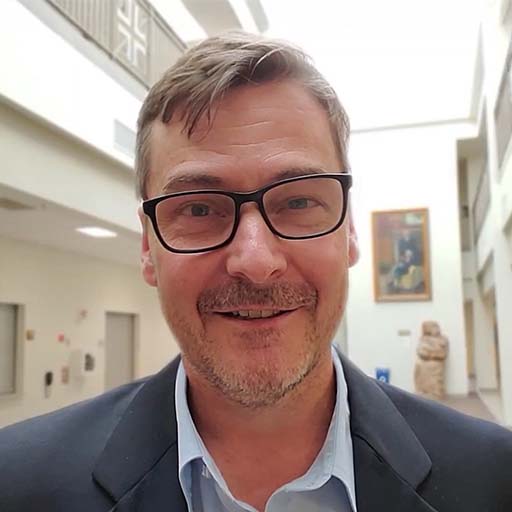
Martin Tracey, Ph.D., Director of General Professional Studies; Board Member, International Albertus Magnus Society; Member, American Philosophical Association; Member, Association for Core Texts and Courses
Faculty Spotlight: Martin Tracey, Ph.D.
Martin Tracey, PhD, is Director of General Professional Studies and Professor of Philosophy at Benedictine University. His scholarly research concerns the moral thought of medieval Latin intellectuals such as Albertus Magnus and Thomas Aquinas. A veteran teacher and administrator, Dr. Tracey teaches courses on a range of subjects including business ethics, environmental ethics, and ancient Greek philosophy. His recent teaching includes the courses “Anti-Misinformation” and “Philosophy of Artificial Intelligence.
Education
- Ph.D. (medieval philosophy), University of Notre Dame
- M.A. (medieval studies), University of Notre Dame
- M.A. (religious studies), University of Chicago
- B.A. (theology), University of Notre Dame
Sources
- U.S. Bureau of Labor Statistics. “Employment Projections: Education Pays.” August 29, 2024. Retrieved January 21, 2025, from https://www.bls.gov/emp/chart-unemployment-earnings-education.htm.
- U.S. Bureau of Labor Statistics. “Project Management Specialists.” April 18, 2025. Retrieved May 15, 2025, from https://www.bls.gov/ooh/business-and-financial/project-management-specialists.htm.
- U.S. Bureau of Labor Statistics. “Human Resources Specialists.” April 18, 2025. Retrieved May 15, 2025, from https://www.bls.gov/ooh/business-and-financial/human-resources-specialists.htm.